Ready-to-run workshop
Says Who?
A one-hour workshop for Muslim teens, 11 to 16, on AI: how to check what a chatbot tells them, and how to do their own thinking.
One hour · Ages 11 to 16 · For madrasas and youth groups
Why now
Your teens are already asking chatbots. In the UK, 64% of 9 to 17-year-olds use them (Internet Matters, 2025). They ask about homework and about friends, and sooner or later some will ask about their deen.
A chatbot sounds just as sure when it’s wrong. And it’s built to agree with you.
This is no ordinary AI lesson. It’s built on one of the great achievements of Muslim scholarship: the science of hadith. In the generation after the Companions, the scholar Ibn Sirin reported that once people began making things up, the scholars started asking of every report: who told you? They checked every person in the chain, and kept the Sunnah safe for us.
The workshop gives your teens that same question to ask about AI: says who?
What happens in the workshop
You open with a game. The room shouts out the ends of a few well-known lines, then one more, fast and sure, and they find out how a chatbot really works: it guesses. Then they stand on one side of the room or the other to show what they think about AI. They’ll do it again at the end.
Part one asks: is it true? After a short video, they vote on three everyday situations, trust it or check it, and see what really happened. Then the main part of the workshop: a live check of a chatbot, in front of the room, on something that matters to them. A whispered-message game shows how the scholars checked a hadith.
Part two asks: whose thinking is it? A quick game about phone numbers, and a second short video. Then they walk to a corner of the room to decide which ways of using AI for homework are OK, and which aren’t, and they see what AI is already doing to young people.
You close with the same statements as the start, so they can see if they’ve changed their mind. They take four questions home, and the last word is theirs: their own questions. Islam runs through it, from the first verse to the last, and nobody is told off for using AI.
What your teens take away
A catchphrase: says who? It’s the signature of the workshop. They shout it three times, loud, like a drill, at about seven moments through the workshop. That’s deliberate: what they say out loud, again and again, is what stays with them. Long after the workshop, whenever a chatbot, a reel or a forward tells them something, it’s the question that comes back.
By the end, they understand that a chatbot guesses, and sounds just as sure when it’s wrong. They know how to check something before they believe it or pass it on, and when AI helps their thinking and when it does the thinking for them. And for their deen, they check with someone who knows, not a chatbot.
What you get
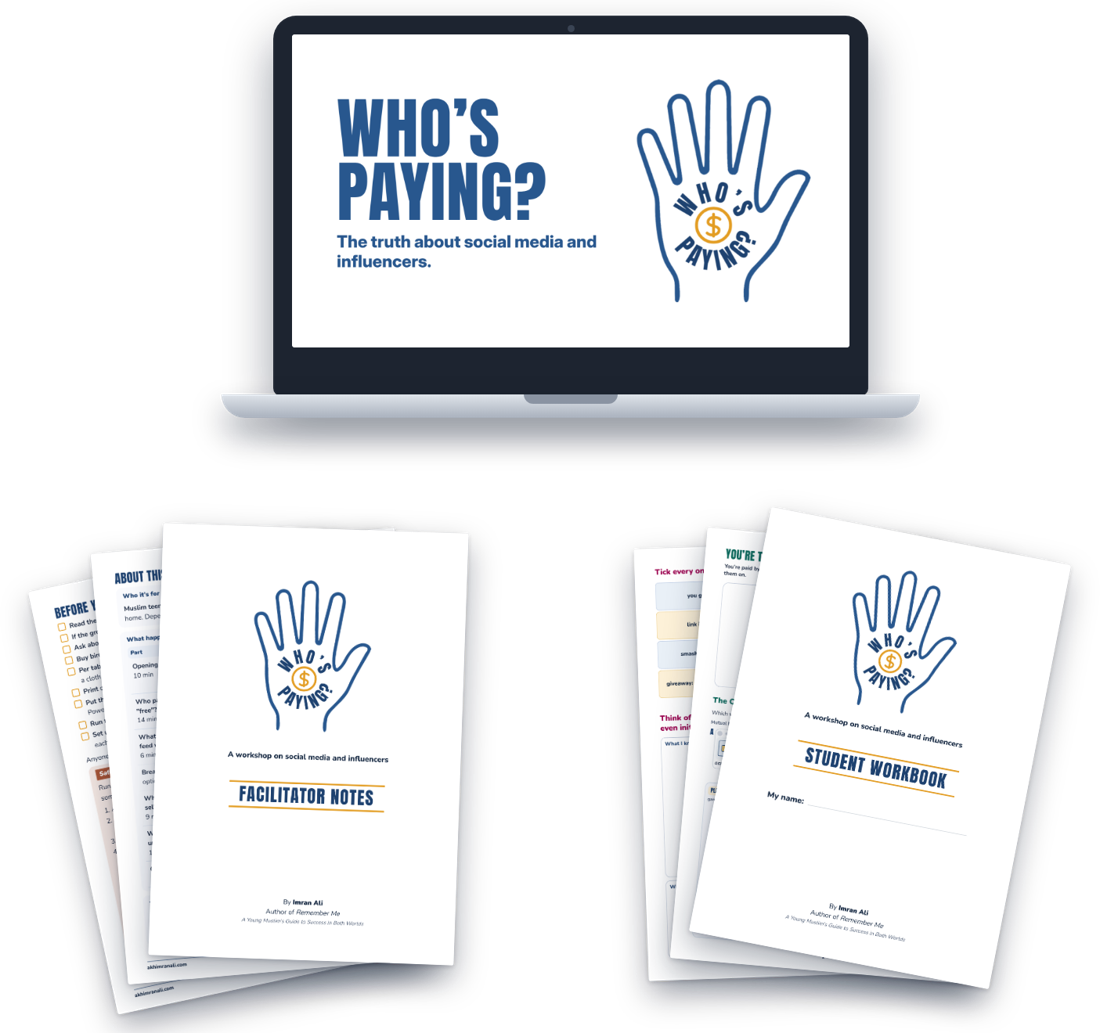
Three files, by email.
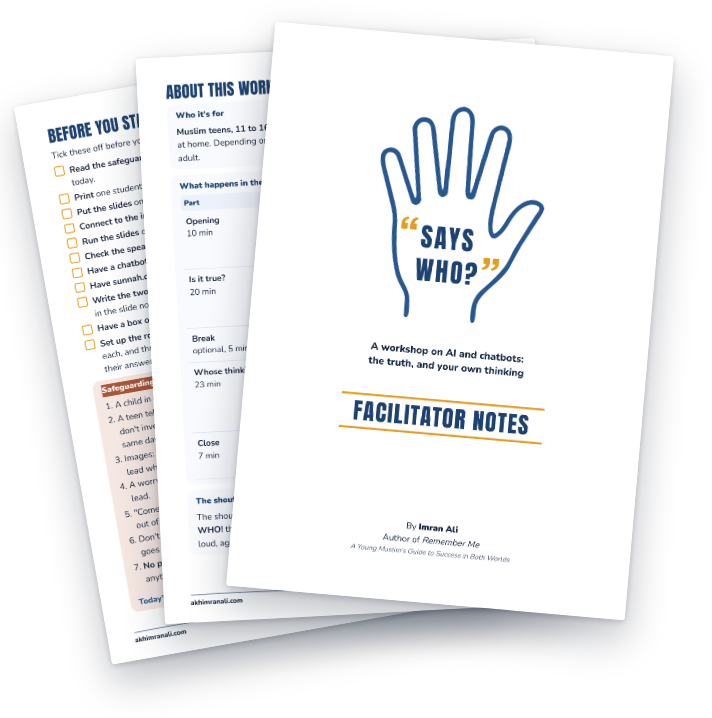
The facilitator notes
Everything you need to run it well, even the first time. What happens in each part of the workshop, a checklist so you’re ready before anyone arrives, and the safeguarding steps. Each activity is set out step by step: what you do, and what the teens do. And under every slide, a note explains what that exercise is for and how to run it.
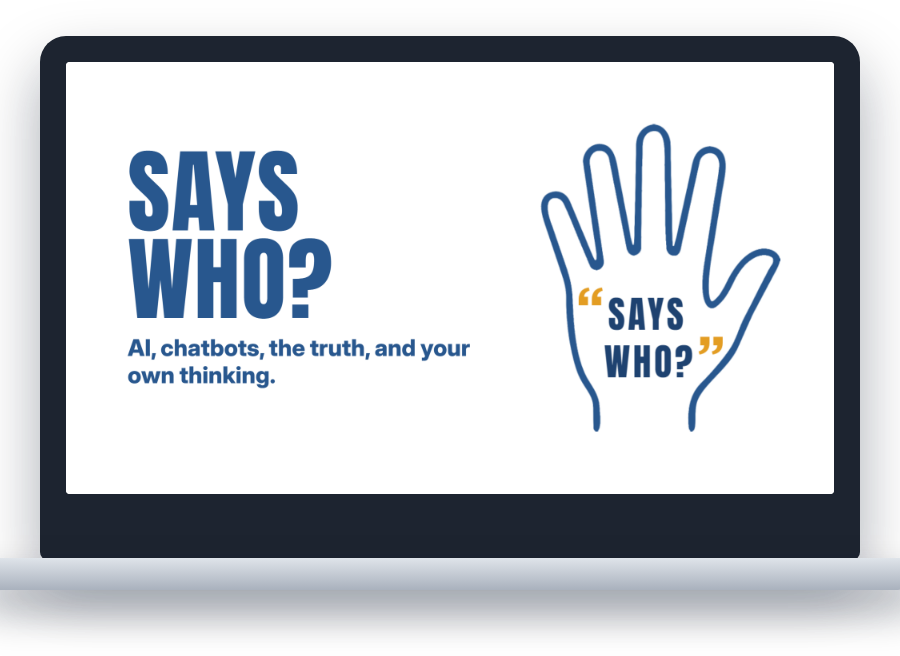
One slide deck that runs the whole workshop
More than 35 slides, so the pace stays quick and the teens stay with you. Every prompt you need is on the screen, even if you’ve never run anything like it before. Under each slide, a note says what it’s for and what to do. You just press next.
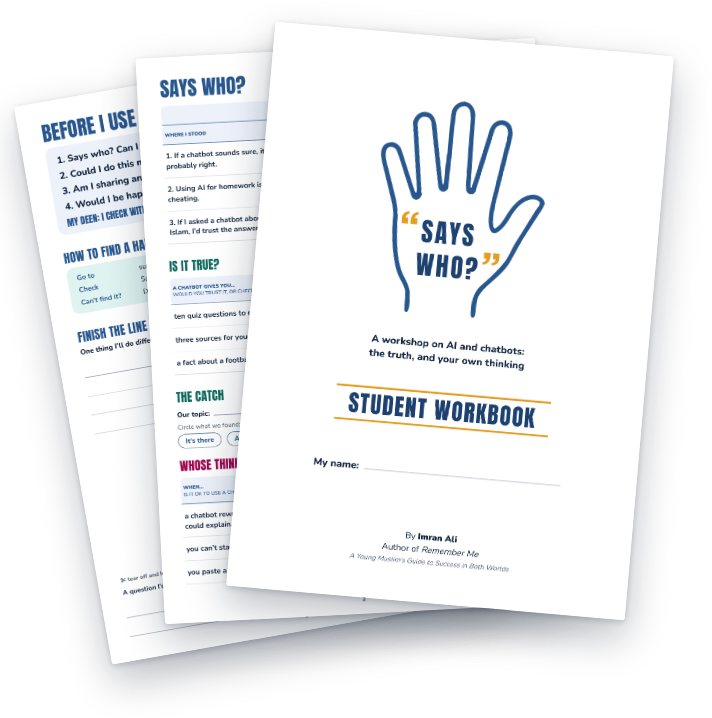
The student workbook
Somewhere for each teen to capture their thinking on the day. They mark what they think at the start and again at the end, judge real situations for themselves, and write down what they’ll do next time. It goes home with them, with questions to try with a parent.
What you need
A laptop, a projector, speakers and the internet. A chatbot open in a private window, and a printed workbook for each teen.
You’ll need someone your organisation has cleared to work with young people. You don’t need any training, and you don’t need to be an AI expert.
Get the workshop
I’ll never sell or share your email. Privacy