Ready-to-run workshop
Who’s Paying?
A one-hour workshop for Muslim teens, 11 to 16, on social media and influencers: how the apps make their money, and the one question to ask about everything in their feed.
One hour · Ages 11 to 16 · For madrasas and youth groups
Why now
Your teens already know the apps are “free”. Most don’t know who’s really paying. When UK 8 to 17-year-olds were shown a real paid post by a celebrity, nearly a third thought the celebrity had posted it because they wanted to share it (Ofcom, 2026).
The apps aren’t selling to them. They’re selling them: their minutes, to advertisers.
This is no ordinary lesson about screen time. It’s built on a saying of the Prophet ﷺ: there are two blessings many people are cheated out of, health and free time. The word he ﷺ used is the word for a bad deal. The workshop gives your teens one question to ask about every app and every feed: who’s paying?
What happens in the workshop
You open with a quick game. Everyone thinks of the first thing that comes into their head, and finds out how easy they are to predict. Then they stand on one side of the room or the other to show what they think about the apps they use. They’ll do it again at the end. A saying of the Prophet ﷺ gives them the question they’ll ask all through the workshop.
Part one is about the apps. As the design team, they build the stickiest app they can, then find out it’s already been built, and who pays for it. Next they decide which settings to switch off on a younger cousin’s first tablet. Then they play the part of a feed, one choice at a time, and see how it learns what keeps a 14-year-old watching.
Part two is about the people in their feeds. Using five words from the Qur’an, the tables sort a handful of posts by what each one is selling. A bingo game on the words influencers use comes next, then a look at the person they watch most: what they know about them, and what that person knows about them. In pairs, they rewrite an advert so it tells the truth. Then something they’ll remember long after the workshop.
You close with the same statements as the start, so they can see if they’ve changed their mind. Each teen picks one small experiment to try for seven days, and the last word is theirs: their own questions. Islam runs through it, and nobody is told off for using these apps.
What your teens take away
A catchphrase: who’s paying? It’s the signature of the workshop. They shout it three times, loud, like a drill, at about seven moments through the workshop. That’s deliberate: what they say out loud, again and again, is what stays with them. Long after the workshop, whenever an app, a feed or an influencer wants their time, it’s the question that comes back.
By the end, they understand that when an app costs nothing, their minutes are what’s being sold. They can spot the tricks that keep them scrolling, and they know a label on an advert doesn’t tell them what’s wrong with it. They leave with one experiment of their own to try for a week.
What you get
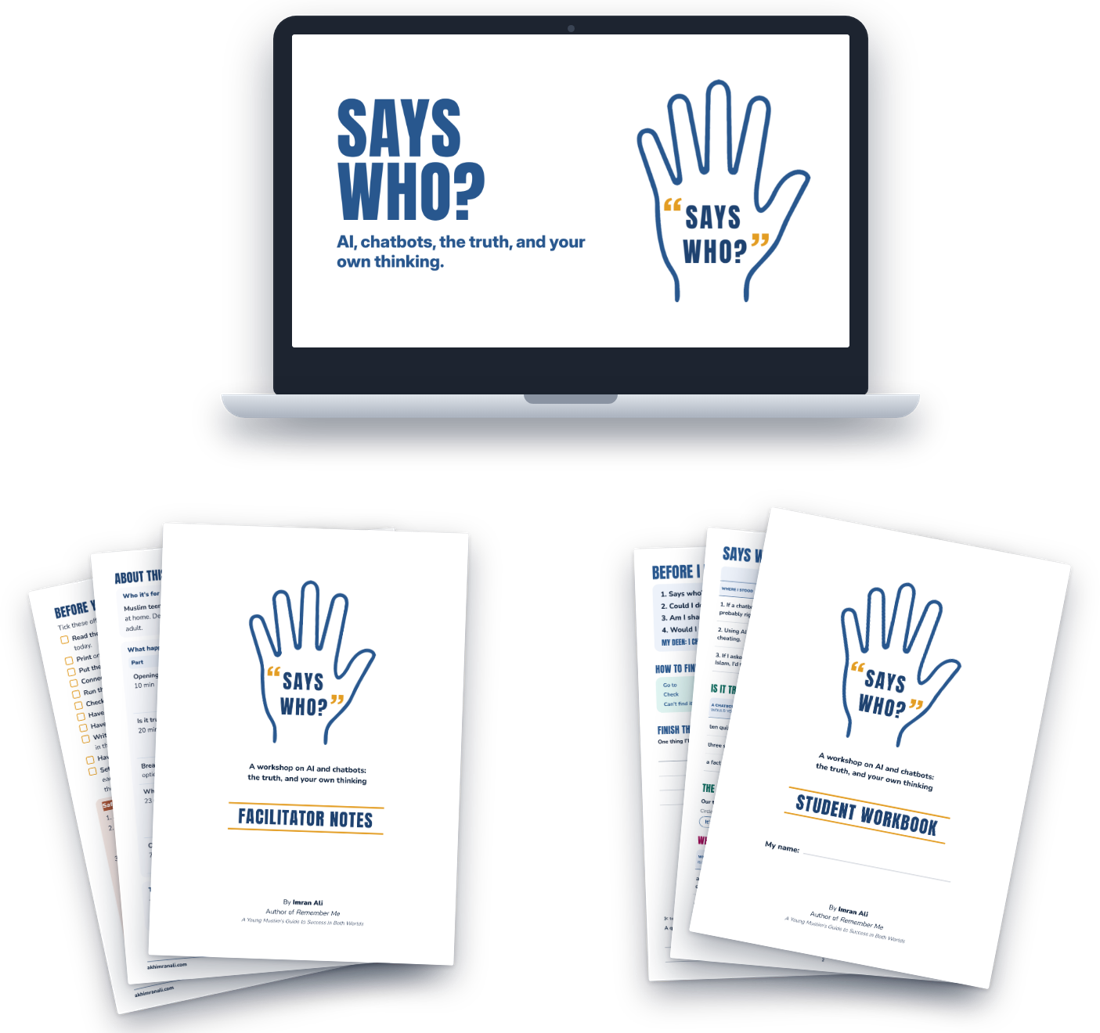
Three files, by email.
The facilitator notes
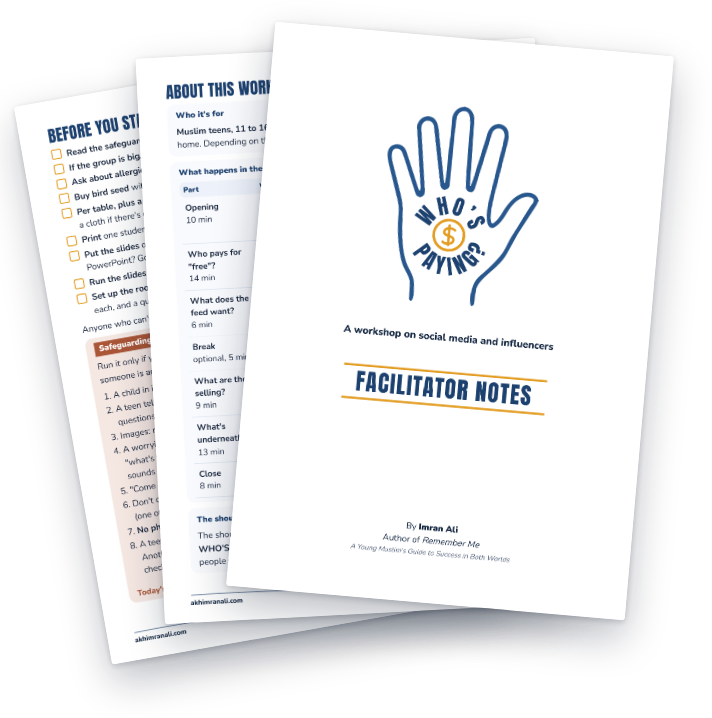
Everything you need to run it well, even the first time. What happens in each part of the workshop, a checklist so you’re ready before anyone arrives, and the safeguarding steps. Each activity is set out step by step: what you do, and what the teens do. And under every slide, a note explains what that exercise is for and how to run it.
One slide deck that runs the whole workshop
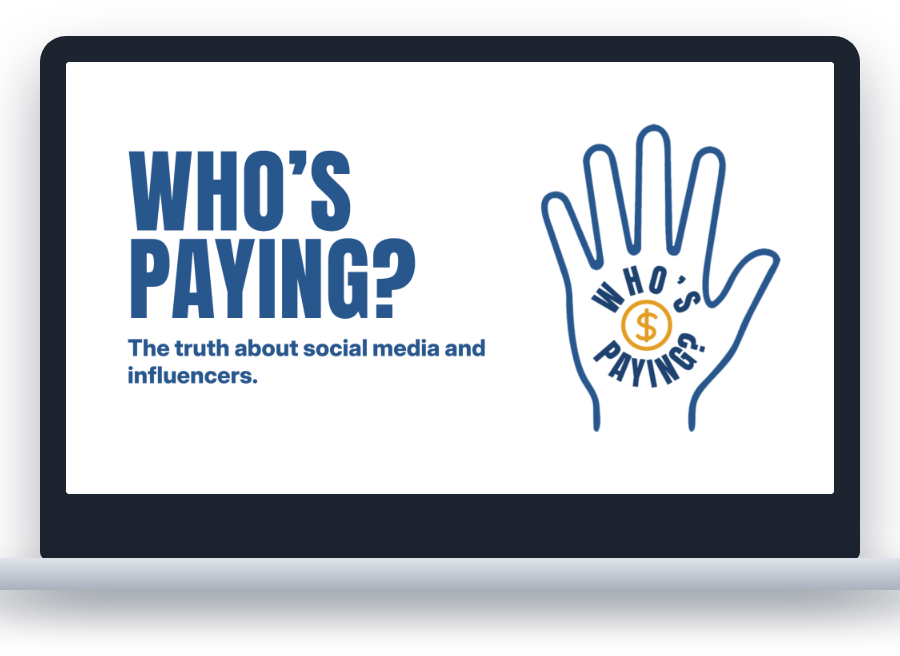
More than 30 slides, so the pace stays quick and the teens stay with you. Every prompt you need is on the screen, even if you’ve never run anything like it before. Under each slide, a note says what it’s for and what to do. You just press next.
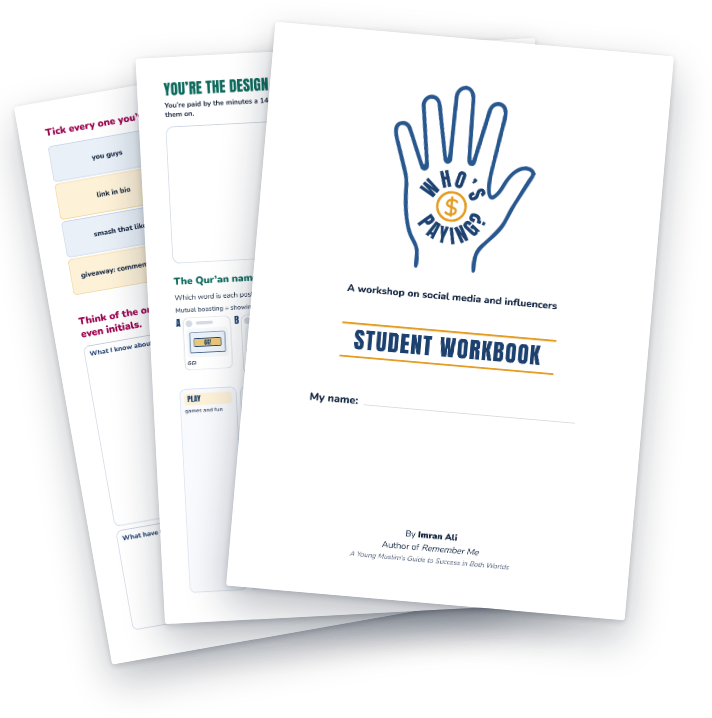
The student workbook
Somewhere for each teen to capture their thinking on the day: the app they design, the advert they make honest, and where they stood at the start and at the end. It goes home with them, with their seven-day experiment, pages to try with a parent, and the answers.
What you need
A laptop and a big screen, a printed workbook for each teen, and a few things from the kitchen and a pound shop (the notes list them).
You’ll need someone your organisation has cleared to work with young people. You don’t need any training, and you don’t need to be a social media expert.
Get the workshop
I’ll never sell or share your email. Privacy